· Théo Turletti · For CISOs · 4 min read
Open Source vs Commercial Honeypot Solutions: Why Deception Security Still Isn't in Your Stack
A comparison of open source honeypots vs commercial deception security platforms. 50 years of proven technology, yet barely deployed in enterprise stacks.

Imagine a security detection system that generates zero false positives by design. One that requires no signatures, no machine learning models, no tuning. One that runs silently in the background and only triggers when an attacker interacts with it.
That technology exists. It has existed since the early days of the internet. It’s called a honeypot.
So why isn’t it in your security stack?
A Brief History of Deception Technology
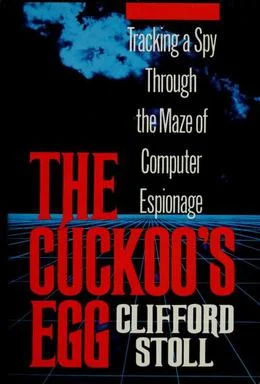
The concept of the honeypot predates most of modern cybersecurity. In 1986, astronomer and systems administrator Clifford Stoll spent a year tracking a hacker through a network of academic and government systems, luring him deeper by leaving trails of fake data. He documented the story in The Cuckoo’s Egg, now a classic.
A few years later, Bill Cheswick at Bell Labs was doing the same thing deliberately: building a system designed to be breached, to observe attacker behavior. In 1999, the Honeynet Project formalized this into a research discipline.
The underlying logic has never changed, and it has never been wrong: place a decoy, watch who touches it, and you’ve found your attacker with certainty. There’s no legitimate reason for a user or system to interact with a resource that was never meant to be used.
Fifty years of evolution in networking, malware, and adversary sophistication haven’t broken that logic.
The Paradox: Still Barely Deployed
Despite being one of the most theoretically sound detection techniques, honeypots remain absent from the vast majority of enterprise security stacks.
EDRs, WAFs, DLPs, FWs? Everywhere. Honeypots? Almost nowhere.
The security industry has a term for what honeypots offer: proactive detection. As opposed to reactive that detects a breach after damage is done.
The need for proactive detection is well-understood. Every CISO who has sat through a post-incident review knows the fundamental question: how long was the attacker already in our network before we saw them?
The answer, on average, is measured in weeks or months.
Honeypots solve exactly this by reducing drastically the dwell time. So why haven’t they taken hold?
The Hidden Cost of Open Source Honeypots
The open source honeypot ecosystem is rich and mature. Cowrie (SSH/Telnet), Conpot (ICS), Dionaea (malware capture), OpenCanary, HoneyD: these projects are trusted and maintained for years, some for over a decade.
Deploying a single Cowrie instance to emulate an SSH server is a weekend project. Deploying a coherent deception layer across a medium-sized enterprise network with 50 decoys, 10 protocols, multiple subnets, active alerting, SIEM integration, ongoing maintenance is a different order of magnitude.
The problem is the operational overhead that comes with it.
In practice, running open source honeypots across an enterprise network means dealing with deployment complexity, no unified management interface, no alerting pipeline, and a maintenance burden that compounds over time.
Open source honeypot solutions are a viable choice for teams with dedicated research capacity, or for specific tactical use cases. For the vast majority of security teams, the operational overhead is simply too high.
What Commercial Honeypot Solutions Actually Change
Commercial honeypot platforms were built specifically to address the operational problem. Removing the friction that prevented deployment in the first place.
A modern commercial honeypot solution lets you install traps across your network through a central console. Every interaction across every decoy flows into one unified interface, connected to the tools you already use: SIEM, SOAR, Slack, email.
The result is a deception layer that can realistically be deployed and kept running by a team that has other things to do.
| Open Source | Commercial | |
|---|---|---|
| Upfront cost | Free | Subscription |
| Engineering time | High | Low |
| Deployment at scale | Complex | Designed for it |
| Centralized management | Manual | Native |
| Alerting integration | DIY | Included |
| Fingerprinting resistance | Low | High |
| Data sovereignty | Depends on hosting | Depends on vendor |
| Best for | Research / specific use cases | Production security teams |
If you have a dedicated detection engineering team with capacity to spare, open source honeypots give you full control. The Honeynet Project and its ecosystem remain genuinely valuable for research contexts.
If you’re a security team responsible for protecting and running a deception layer in production networks, a commercial honeypot solution is the realistic path.
The Technology Was Always There
Fifty years later, deception security is more relevant than ever, AI-powered threats move faster but still interact with resources they shouldn’t.
The barrier was always operational. Deploying deception at scale, without a full-time team dedicated to it, used to be impractical. That’s what the shift from open source to commercial honeypot solutions represents.
The proactive detection your security program needs has existed since the 1980s.
Now it can actually run in your network.
TrapEye is a honeypot and deception security platform built for MSSPs and security teams. Traps are deployed and connected in minutes to our Swiss sovereign infrastructure.